Facelift Surgery
Conveniently located to serve Seattle and Bellevue
Jump To
 Facelift Planes
Facelifts may be performed in different planes
- Subcutaneous Plane: Under the skin and fat layer
- Deep Plane: Under the SMAS layer
- Subperiosteal Plane: Under the periosteum of the bone
Facial Aesthetics
Facelift Surgery has a powerful impact on changing the appearance of the neck, jowl and lower 1/3 of the face. It can restore the normal youthful facial proportions in these areas dramatically. As we age or with weight loss the face essentially descends. The fat pads in the face descend. Ligaments that attach the soft tissue to the underlying facial skeleton weaken and sagging occurs. The skin also thins and losses its elasticity. Sometimes platysmal banding can also be seen in the neck in addition to loose skin. The facelift or neck lift procedure can rejuvenate the descent by re-suspension of the underlying soft tissue and removal of excess skin in one procedure.
Reviews
Dr. Parikh has been very caring and has demonstrated that he was more concerned about my overall health as his first priority. I have been very happy with my results so far and plan on returning for further work. We talked to a number of doctors before we selected Dr. Parikh and believe that he represents a wonderful choice based on his skill, personality/bedside manner, cost, and experience. I strongly encourage anyone considering plastic surgery to do your research and schedule a consultation with Dr. Parikh. You will be happy you did!
N.J.
Facial Volume
Loss of volume also occurs with age. This volume loss occurs can be seen easily in the cheeks and lips. This is a separate issue and needs to be restored. This can be accomplished with fillers or fat transfer procedures. Restoring the volume is part of facial rejuvenation and should be evaluated as part of the facelift consultation.
Facelift vs Necklift
Facelift: Wider area of skin elevation down in the neck and upwards towards the cheek
Necklift: Skin elevation down in the neck may involve tightening the muscles in the midline neck aka plastyma muscles through a separate incision under the chin
Facelift with Fat Transfer
Fat can be taken from other areas of the body such as the abdomen or thighs. This fat is then processed and injected into the areas needed. Common areas of fat transfer are the nasolabial folds and cheek area and lips.
Am I a Candidate for a Facelift?
Great candidates are those with excess skin in the neck and lower face. They should be healthy and nonsmokers. Smoking should be completely stopped prior to the procedure and after the procedure for over one month. High blood pressure should be controlled at all times prior to the procedure and after the procedure.
With any surgical procedure complications can occur, but are generally low. We encourage that you ask about complications during your visit with Dr. Parikh. Dr. Parikh will ensure that your safety is first and discuss any concern in great detail that is tailored to your specific medical history.
Deep Plane Facelift
What is a facelift?
A facelift, also known as a rhytidectomy, is a surgical procedure designed to restore a more youthful, refreshed appearance by addressing visible signs of facial aging. Over time with age, the skin, muscles, and deeper tissues of the face can loosen and sag, leading to jowls, deep folds, and loss of definition along the cheek, jawline and neck. A facelift works by carefully lifting and repositioning the skin and muscles to restore a more youthful natural contours. The goal is not to change who you are, but to help you look like a younger, well-rested version of yourself, with results that are natural, balanced, and long-lasting.
Deep plane facelift vs. Traditional facelift
There are many techniques to facelift surgery. The traditional facelift technique manipulates the Superficial Musculo-Aponeurotic system (SMAS) in order to reverse sagging of jowls and neck laxity. A deep plane facelift technique requires more extensive dissection of the SMAS layer by releasing four key ligaments of the face. This allows the surgeon to better address cheek elevation along with the jowls and neck laxity. Deep plane facelift also utilizes a composite flap which includes the skin, adipose tissue and SMAS layer as a single unit. This allows the surgeon to volumize and redrape the cheek region and the angle of the jaw. It also allows for improved correction of nasolabial folds and marionette lines. The composite flap is especially helpful in patients with a history of smoking or connective tissue issues to prevent possible skin related complications from the surgery. Because of the more extensive dissection, the surgery is more technically challenging and may require more time in the operating room. There is also a higher potential risk to nerve injury. If you are thinking of getting a facelift make sure it is from a high volume reputable surgeon in order to minimize these risks.
| Feature | Traditional Facelift | Deep Plane Facelift |
|---|---|---|
| Technique | Lifts skin and tightens the SMAS layer | Works beneath the SMAS, releasing facial ligaments and lifting skin and fat together as a composite flap |
| Best For | Jawline and neck definition. | Midface (cheeks), jawline, and neck definition. |
| Result Longevity | About 5–10 years. | About 5–15 years. |
| Look | Natural results around the jawline and neck. | Natural results of the cheek, jawline and neck. Softer nasolabial fold and marionette lines |
| Recovery Time | Social downtime 2–3 weeks. | Social downtime 2–3 weeks. |
| Complexity | Less technically demanding. | More advanced, requires high surgical expertise. |
| Risks | Low | Slightly higher risk of temporary nerve weakness; permanent injury is rare. |
| Scarring | Hidden around ears/hairline. | Hidden around ears/hairline. |
Who is a candidate for deep plane facelift
A good candidate for facelift surgery is someone who is noticing visible signs of aging in the lower face and neck, such as sagging skin, jowls, or loss of jawline definition, and wants a longer lasting solution. Our patient age ranges from 20s to 90s, but age alone doesn’t determine candidacy. The overall health, skin quality, and individual anatomy are more important factors to consider. Ideal candidates are in good general health, do not smoke (or are willing to stop before and after surgery), and have realistic expectations about the results. The goal is not to make someone look like a different person, but to help them look like a younger, refreshed version of themselves.
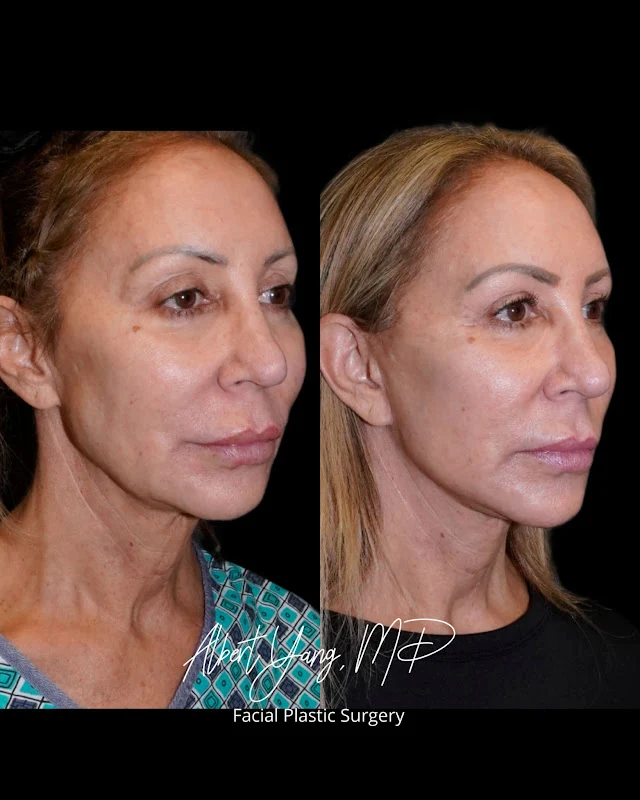
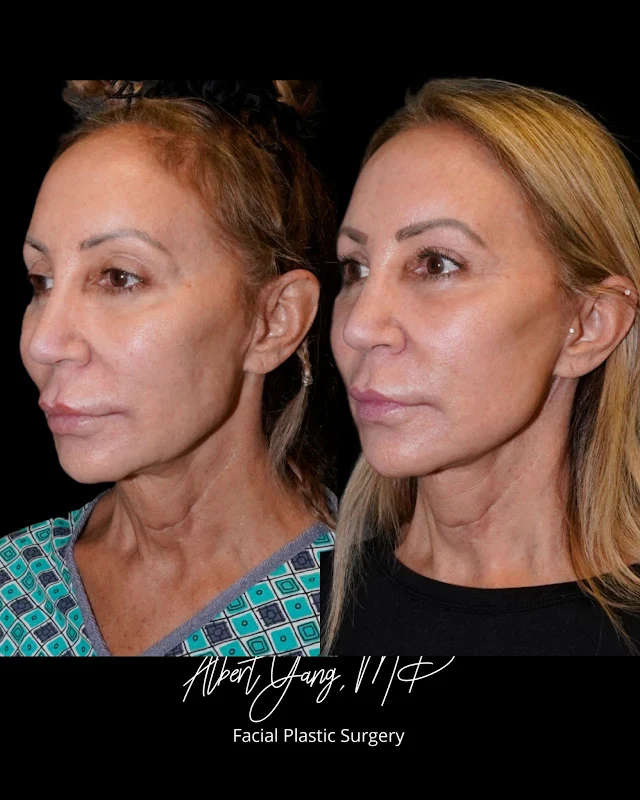
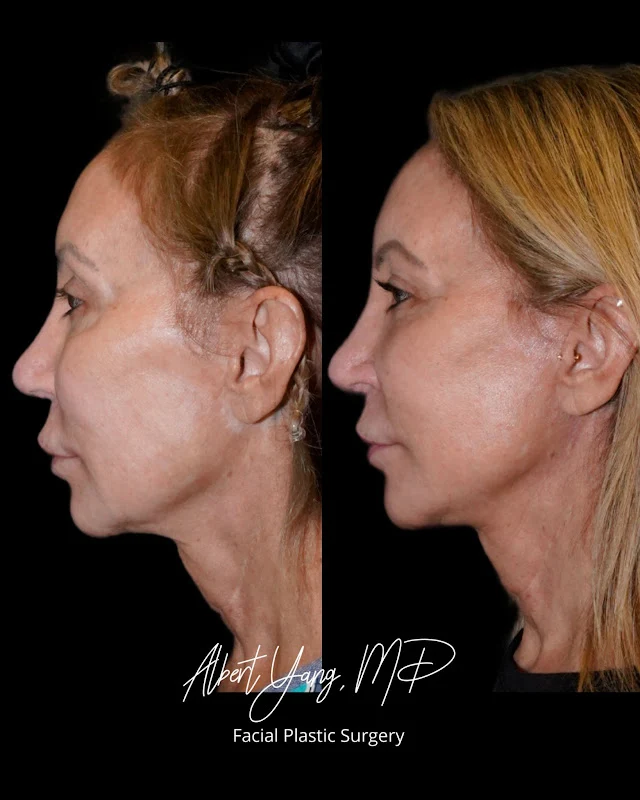
Deep Plane Facelift Before and After Photos
Facelift Surgery Process: What to Expect
A facelift is carefully planned to address the lower face, jawline, and neck while preserving natural expression. During your consultation, Dr. Parikh evaluates skin quality, facial volume, ligament laxity, and neck anatomy to determine whether a traditional or deep plane facelift is appropriate.
On the day of surgery, the facelift procedure is performed under anesthesia in an accredited surgical facility. Incisions are discreetly placed around the ears and hairline. In a deep plane facelift, the skin, fat, and SMAS layer are repositioned together after releasing key facial ligaments.
This allows for elevation of the cheeks, softening of the nasolabial folds, and improved definition of the jawline and neck. Excess skin is then removed without tension to support smooth healing.
Facelift Recovery
Facelift recovery varies based on surgical technique, individual healing, and post-operative care. Swelling and bruising are expected and typically reach their peak within the first week. Discomfort is typically mild to moderate and well-managed with prescribed medication.
Most patients see visible improvement within two to three weeks. Downtime typically involves limiting activity for approximately two weeks and avoiding strenuous exercise for several additional weeks.
Incisions are placed to heal discreetly and continue to fade over time. Post-operative care includes head elevation, gentle cleansing, scheduled follow-up visits, and temporary activity restrictions to support proper healing.
Facelift Cost in Bellevue and Seattle
The cost of a facelift in Bellevue and Seattle varies based on the surgical technique, operating time, and whether additional procedures are performed. A deep plane facelift typically reflects greater technical complexity and surgical expertise.
During your consultation, Dr. Parikh provides individualized pricing tailored to your specific anatomy, goals, and recommended approach. Financing options and payment plans may also be available to qualified patients.
Facelift FAQs
Schedule Your Facelift
Schedule your consultation for your facelift with Dr. Rikesh Parikh in Bellevue, WA. During your appointment, you’ll have the opportunity to discuss your goals, ask questions, and learn more about the procedure. Don’t wait—contact us today and take the first step toward achieving the look you’ve always dreamed of!
Related Blog Posts

HOW CAN I MAKE MY FACE LOOK MORE FEMININE?
Many trans women want to make their outer aesthetic better match their inner authentic self. This leads to undergoing facial-feminization surgery. Facial-feminization surgery is ideal for trans women who experience … Read More
RECONTOURING THE NECK WITH A NECK LIFT
A neck lift is a cosmetic procedure conducted to remove excess fat and skin from your neck area, resulting in a firmer, smoother, and slimmer side profile. A wrinkled neck can add years to your age… Read More