Rhinoplasty for a Bulbous Nose
Conveniently located to serve Seattle and Bellevue
Jump To
Refine Your Nasal Tip and Restore Facial Proportion
A rounded or wide nasal tip can affect overall facial balance. For patients in Seattle who feel self-conscious about a bulbous nasal tip, rhinoplasty offers a precise surgical solution to improve tip definition and restore facial proportion.
At RP Plastic Surgery, Dr. Rikesh Parikh approaches every rhinoplasty with careful attention to each patient’s nasal anatomy, skin characteristics, and aesthetic goals. His objective is not simply to reduce the nasal tip, but to reshape it in a way that looks natural and suits each patient’s individual facial structure.
Rhinoplasty Before and After Photos
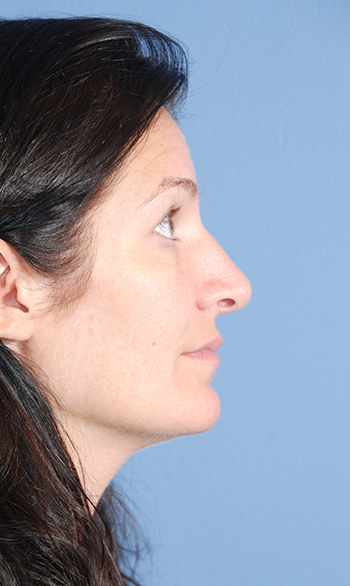 Before
 After
AfterDr. Parikh’s rhinoplasty gallery can help you look closely at how changes to nasal shape affect the profile, front view, tip definition, and nostril balance. Because rhinoplasty planning may involve cartilage support, skin thickness, and breathing considerations, gallery photos are most helpful when reviewed with your own anatomy in mind.
*Individual Results may vary
What Causes a Bulbous Nose?
A bulbous nasal tip is typically the result of wide or convex lower lateral cartilages, thick overlying skin, or excess soft tissue that obscures tip definition. The lower lateral cartilages, also known as the alar cartilages, determine much of the nasal tip’s shape. When they are naturally broad, rounded, or widely spaced, they create a fuller, less defined appearance at the tip of the nose.
Genetics plays a significant role in nasal tip shape, and many patients have had a rounded tip since early adulthood. In some cases, the appearance of a bulbous tip becomes more pronounced with age as skin elasticity gradually decreases and the nasal support structures begin to shift.
How Rhinoplasty Can Correct a Bulbous Nose
Rhinoplasty for a bulbous nose focuses on reshaping, repositioning, or selectively reducing the lower lateral cartilages to improve tip definition and narrow the overall width of the nasal tip. Depending on the patient’s anatomy, this may involve suture reshaping techniques, targeted cartilage reduction, or structural grafting to reinforce tip projection and long-term support.
Tip refinement is among the most technically demanding aspects of rhinoplasty. Even subtle adjustments to the lower lateral cartilages can significantly alter the way the nose relates to the rest of the face.
This is why a thorough preoperative evaluation and individualized surgical plan are essential. In some cases, bulbous tip correction may be combined with dorsal hump reduction, nostril reshaping, or correction of nasal asymmetry to achieve a more balanced overall result.
Thick Skin and Bulbous Nose Rhinoplasty
Patients with thicker nasal skin often wonder whether rhinoplasty can deliver meaningful improvement. While thick skin can limit the degree of tip sharpness achievable through surgery, noticeable and lasting improvements in nasal shape are still possible with the right approach.
Rather than aggressive cartilage removal, modern rhinoplasty techniques often focus on building a stronger, more refined nasal framework beneath the skin. A well-supported structure encourages the overlying tissue to conform to a more defined shape over time. Patients with thicker skin should expect a longer resolution period for tip swelling, with final results continuing to develop gradually over 12 months or more.
Who Is a Candidate for Bulbous Nose Rhinoplasty?
You may be a good candidate if you:
-
- Feel your nasal tip appears wide, rounded, or poorly defined
- Feel your nose draws disproportionate attention from the front or three-quarter view
- Are bothered by a lack of tip projection or contour
- Are in good overall health with no uncontrolled medical conditions
- Have realistic expectations about surgical outcomes and the healing process
Most patients seeking nasal tip rhinoplasty in Seattle are not looking for a dramatic transformation. They want subtle but meaningful refinement that improves facial balance while still looking natural and like themselves.
Recovery and Results
Swelling and bruising diminish substantially within the first two to three weeks after surgery. Because the nasal tip is one of the last areas to fully resolve, tip refinement continues to emerge gradually over several months. Many patients notice meaningful improvement in tip definition as early as six to eight weeks, with continued refinement through 12 months.
As healing progresses, patients often notice:
- A more defined, narrower nasal tip
- Improved facial balance and proportion
- A softer, less rounded overall nasal contour
View Dr. Parikh’s before-and-after gallery to explore real rhinoplasty results achieved at RP Plastic Surgery.
Dr. Parikh’s Approach to Bulbous Nose Rhinoplasty
Rhinoplasty for a bulbous nose requires a precise understanding of nasal anatomy, cartilage dynamics, and how refinements in one area affect overall nasal balance. At RP Plastic Surgery, Dr. Rikesh Parikh — a Double ABMS Board-Certified Plastic Surgeon and Fellow of the American College of Surgeons — brings advanced surgical training and a detailed, anatomy-driven approach to every rhinoplasty procedure.
Dr. Parikh completed his plastic surgery residency at Vanderbilt University and his general surgery residency at SUNY Buffalo, building a strong foundation in both reconstructive and aesthetic surgery. His approach to nasal tip rhinoplasty prioritizes long-term structural support alongside aesthetic refinement.
Rather than focusing solely on reduction, he evaluates cartilage strength, skin thickness, tip projection, and overall nasal proportions to develop a surgical plan that produces balanced, natural-looking results that hold up over time.
During your consultation, Dr. Parikh will take detailed measurements, assess your nasal anatomy, and discuss what degree of improvement is realistically achievable based on your specific features and goals. Patients from Seattle and the greater Bellevue area choose Dr. Parikh for rhinoplasty because of his individualized planning, technical precision, and commitment to results that complement each patient’s appearance rather than alter it.
Bulbous Nose Rhinoplasty FAQs
Reviews
Dr. Rikesh Parikh is one of the best doctors in the NW! He did a Rhinoplasty for me about 2 weeks ago, and it looks TOO perfect. I recommend everybody to go to Dr. Parikh for facial and body surgery.
C.M.
Schedule Your Rhinoplasty Consultation in Seattle
If you are bothered by a wide or poorly defined nasal tip, contact RP Plastic Surgery today to schedule a consultation with Dr. Parikh. We proudly serve patients throughout Seattle, Bellevue, and the surrounding areas.